Project 3- Colored Object within a Monochrome Setting
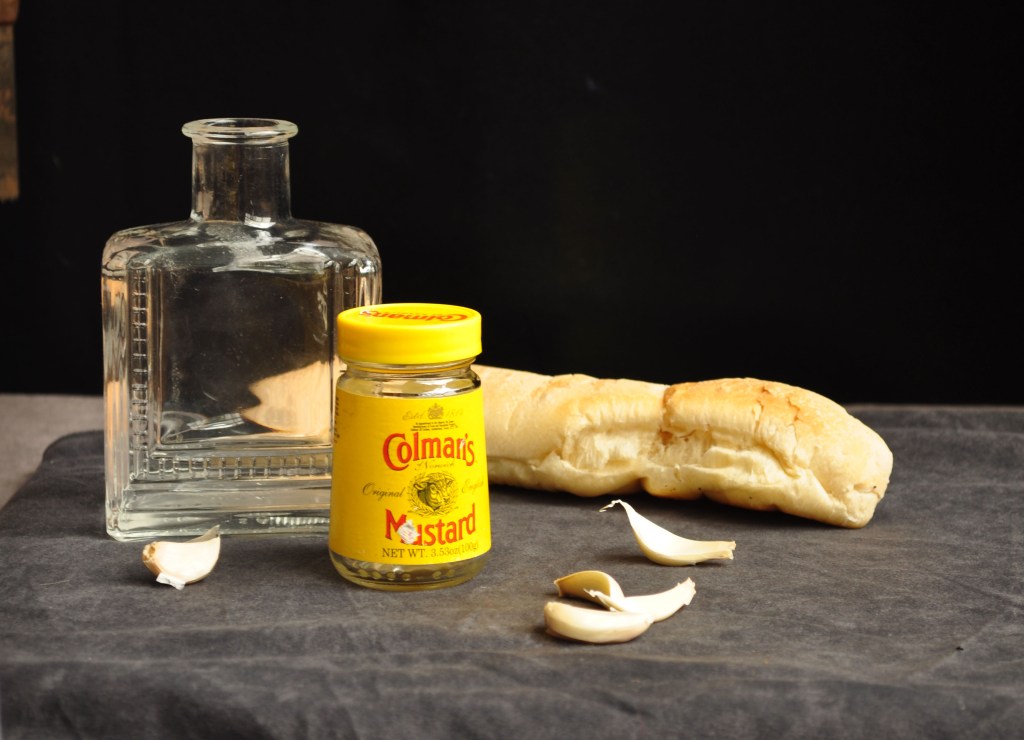
If we reflect on the work of Toulouse Lautrec, we see many examples of Lautrec’s suppression of color in the print or drawing. Upon this monochrome or minimal base, Lautrec introduces a singular bold color or a color chord, typically of 1-3 colors. In this Project 3, we will take a bottle or can that has a brightly colored label, and place it among a series of monochromatic objects. These objects need not be black or gray, but we will render them as such. In this scenario, color becomes the compelling force that grabs our attention and forces us to look at the image. This is one way to achieve a point of focus- through color.
Please watch and review the link on 5 Ways to create a Point of Focus as part of this lesson : https://thevirtualinstructor.com/how-to-create-focal-points.html
Assignment
This Project 3- Colored Object within a Monochrome Setting, will summarize what we have learned about 19th Century Poster Design and how color can be used to create drama within an image. By suppressing the color of the surrounding objects, our main object takes precedence through color and design within the composition.
Materials:
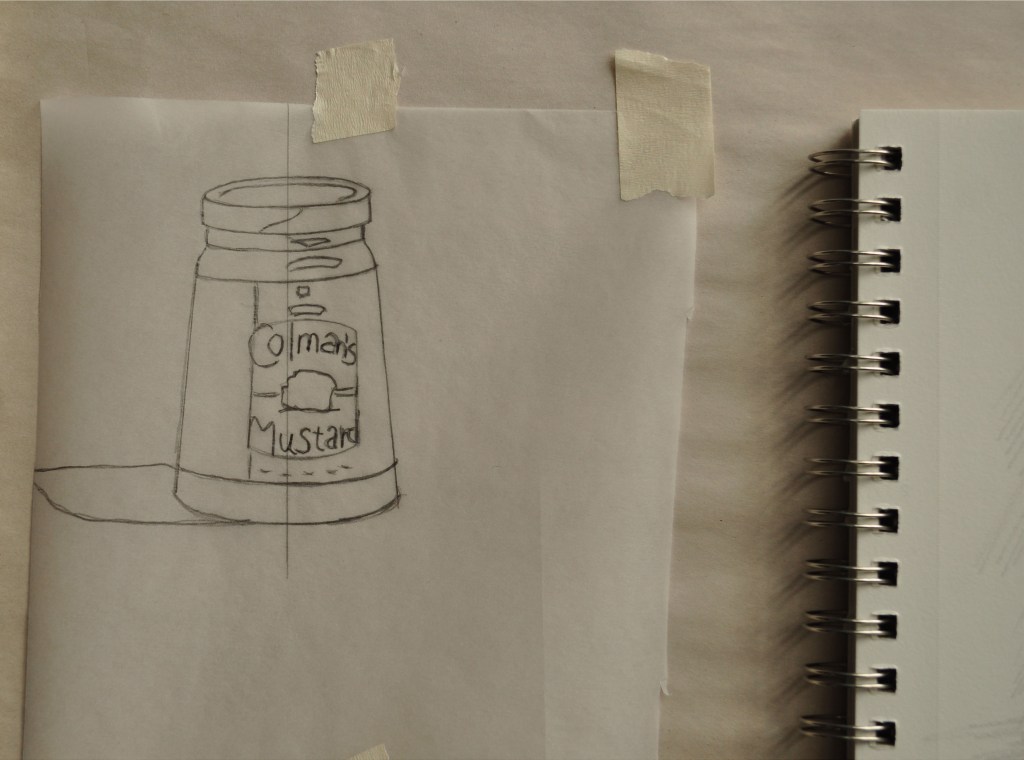
- The colored object- hot sauce, tomatoes, Goya product, mustard, Latino food etc. with a nicely colored label. You have already made a study of this object and we will use this for reference.
- 2-3 other objects to create the setting. These can be any color, but we will render them in black, gray and white only in pencil using our pencil techniques. They can be other jars/bottles/fruit etc. Just make sure they fit on your page and create a good composition. Remember to look at the cast shadows as part of the composition.
- 11 x 14 Multi-media pad.
- Pencil set, Drawing I
- Gum eraser
- Sharpener
- Watercolor set
- Brush with set
- Water in container
- Paper towels
Instructions:
- Set up your composition. Reflect on what creates a focal point. You can refer to link in this section to review what works.
- First, we will render all the objects in HB pencil. Use our comparisons and strategies to render these objects correctly.
- Make sure the composition is strong. Don’t forget to consider the cast shadows as part of this compo.
- You may want to create a small Notan sketch to help you.
- After drawing your objects correctly, find the shadow patterns. How will these assist your composition?
- Don’t watercolor yet. Use this lesson to establish the composition and the shadow patterns. Begin to render the monochrome objects in 5 values as you learned in Drawing I.
Upload progress to this assignment section.
Due:



 Drawing Class