Illustration Project, Part II
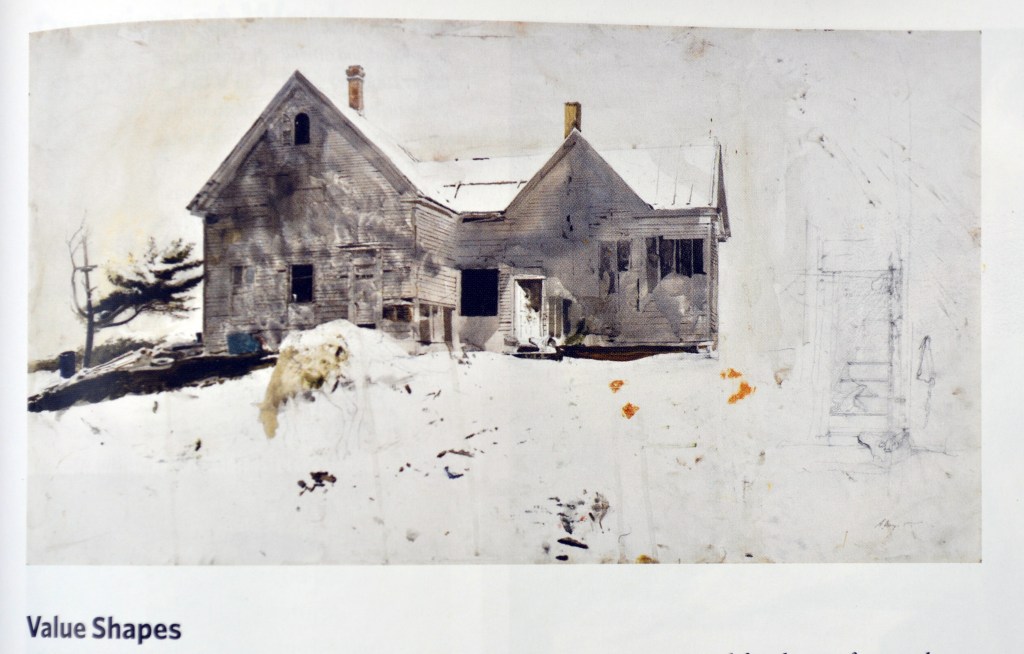
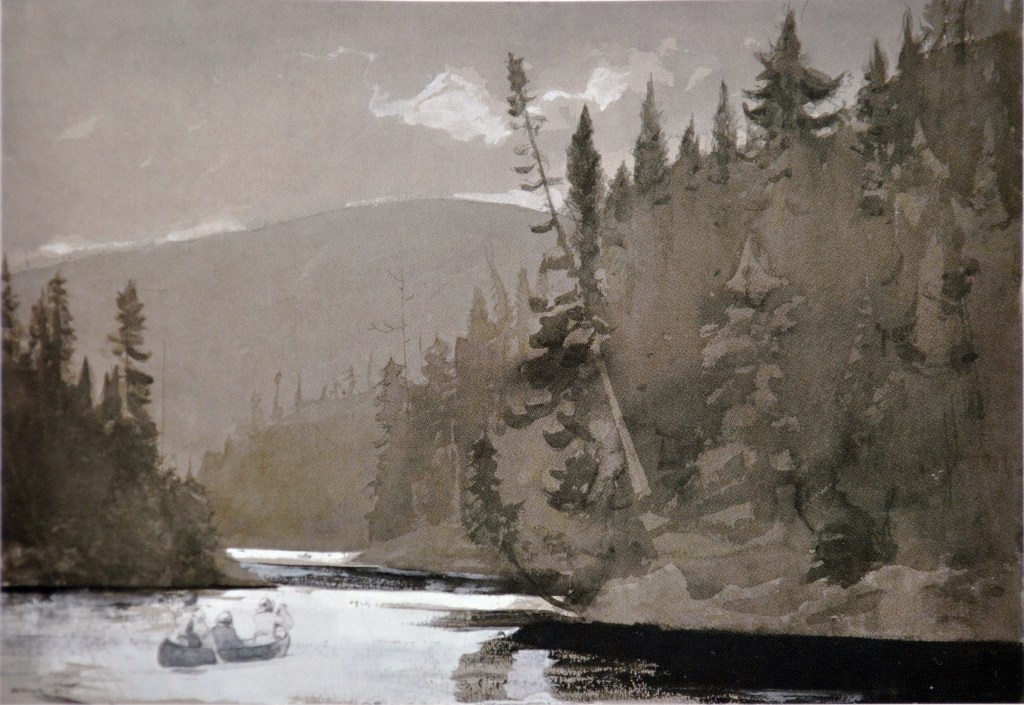
As we begin to work on this project, I will point out different ideas and techniques to help you create a strong composition to support the passage from “Walden”. The first idea is one that we have already been working on. It is composing the large masses, whether it is like a 3 value Notan or a color composition or a combination of both. So, this week we are studying how to think about the large masses that will be in our composition.
The passage reveals these large elements:
- The space is an outdoor space. The light is early morning in Massachusetts.
- There is a clearing in the woods, near a large pond. I have visited this place and the pond is large-ish with very clean, clear water. It is not bogged down by any plant over-growth. It is also the local swimming hole. Originally, it was totally isolated. The trees are the same as here: maple, oak, hickory, beech, poplar, pine. There may be native grass and scrub bushes. There would be leaves on the ground in the woods, even though it is summer.
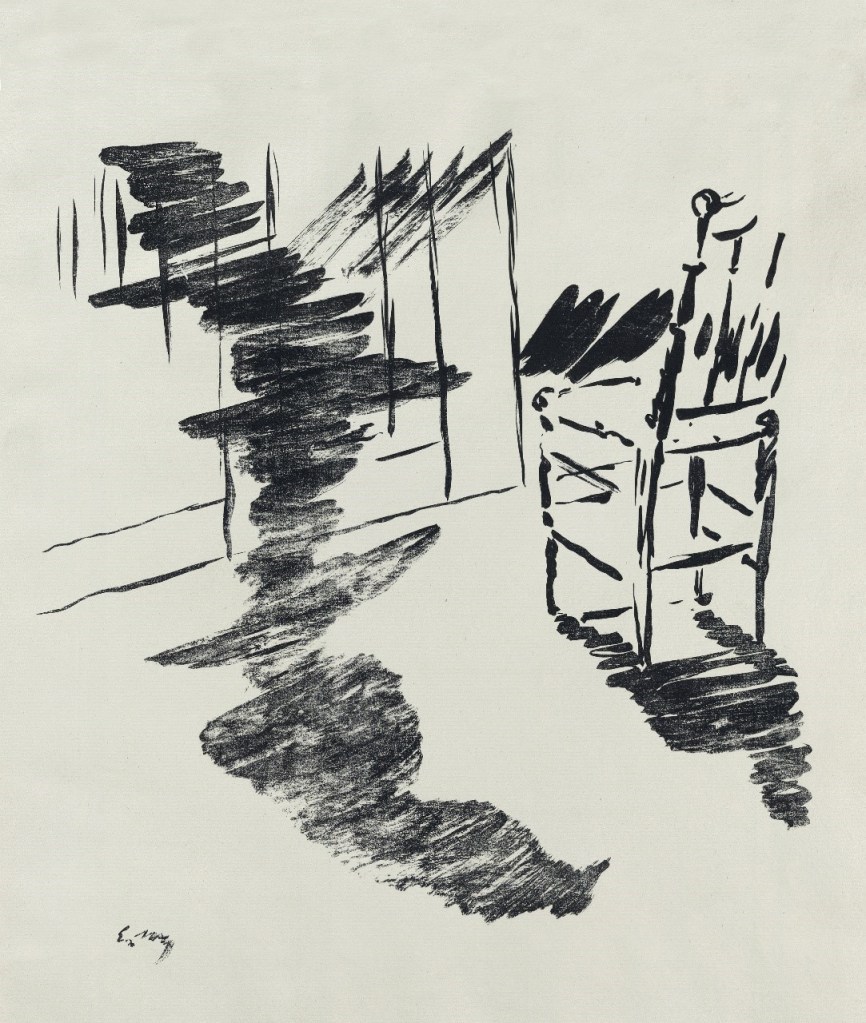
- Thoreau’s cottage was on one of the short sides of the pond and I believe faced east, hence why he washes his floor in the morning as the sun would hit this clearing at this time of day. I do not want the cottage depicted, but note the direction of the east light onto the ground in this clearing.
- Lastly, there is the furniture.
- The major masses: Trees/forest area/pond [not necessary]; ground plane; furniture. All with a feeling of the direction of the morning light.
Assignment: STUDY SHEET
Take the thumbnails you have already created. Develop a composition based on the large masses. Try to incorporate as least 3 elements- Clearing/ground mass, tree mass with or without pond, with or without furniture. See what you can do. You may want to focus mainly on the first two to get a real sense of where the objects will be. We will focus on the specifics of the furniture next lesson.
Place your sheet vertically
Top half of sheet: make a pencil sketch of the large masses, add middle value of each area (no details yet). This will be your value map.
Bottom half of sheet: Watercolor sketch of the large masses (this is a study- no detail. Just experiment with color area). Try to get the value of these areas the same value as the sketch above on your sheet. It is OK to leave the pencil showing in the watercolor sketch. Pencil will always be evident in a watercolor.
11×14 Multi-media pad
Pencils
Watercolor washes only (simplicity is the key here)
This is a study sheet and not the final sheet.
Take photo and upload.
Due: Thursday, April 1 at 11:59 am; Wednesday, March 31 before 11:59 AM.
Secondly, Please go to Videos and look at the link Jungho Lee Illustrator and answer the questions in the assignment section. Due: Thursday, April 1 at 11:59 am; Wednesday, March 31 before 11:59 AM.
 Drawing Class