Project 5, The Idealized Head, Part II
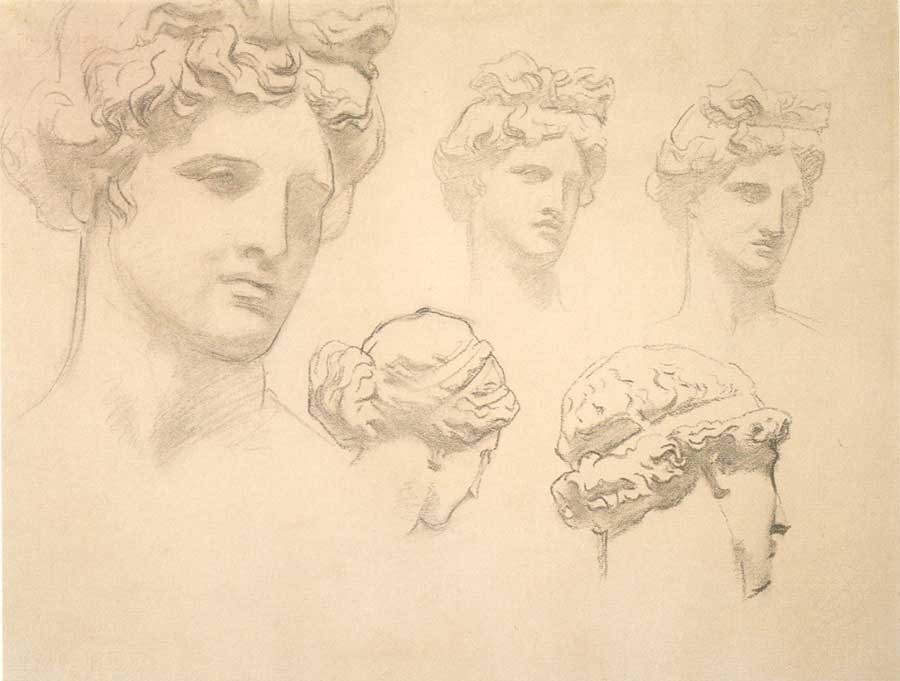
In this lesson, I will go over the process of copying the Gibson and Aphrodite heads and examine some ways to deal with the more difficult details that have to be rendered. I will also discuss laying in the shape/pattern of the large masses of the shadows first, then add the respective values. In the Gibson head we will leave small patterns of white in the mass of the hair. And in the Greek head we will simplify the shadow shapes in the schematic design in order to give a more unified feel to our drawing. I have some examples of John Singer Sargent’s copies of Greek heads and figures for reference.
Assignment
Materials
- Illustration Board 15 x 20 in a horizontal format, laid out with a grid to transfer the two heads. This was covered in the previous lesson.
- Pencils 2H and/or HB, this is for the initial transfer, stay light!
- Gum eraser (I found this better than the white eraser)
- Scrap sheet (place this over your illustration board and under your hand as you work, to prevent smears)
You are to continue moving this final project along.
Upload your progress to this assignment section. I want to see your progress before it is due. Please take your photo the correct way, otherwise there is too much distortion for me to comment. Secondly, watch the video, Loomis Head, Proko III, and answer the questions. Due: Thursday, April 22 before 11:59 am; Wednesday, April 21 before 11:59 AM.
Progress Due: Thursday, April 22 before 11:59 am; Wednesday, April 21 before 11:59 AM.


 Drawing Class